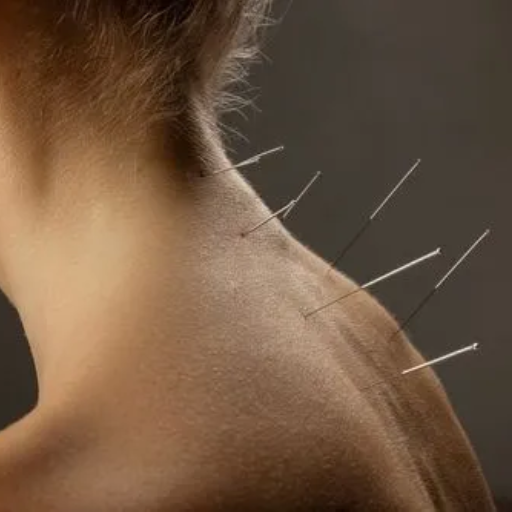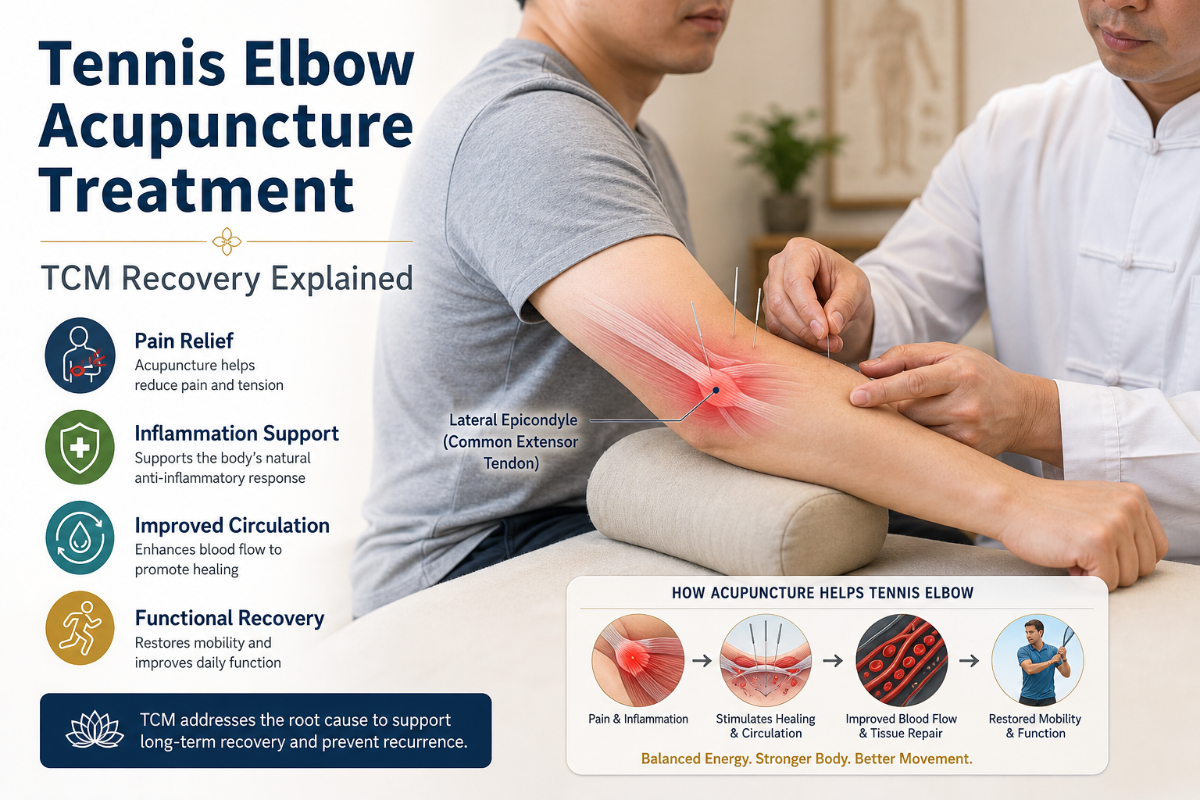
Traditional Chinese Medicine | Elbow Pain | Recovery Planning
Tennis Elbow Recovery: TCM Treatment Explained
If you are comparing tennis elbow acupuncture treatment with rest, braces, injections, or physical therapy, the useful first question is not whether one method is magic. It is whether your elbow pain behaves like lateral epicondylitis and whether a TCM plan can support pain control while the tendon load is corrected.
This guide explains tennis elbow causes, local acupuncture points, Tuina massage support, safety limits, and how a consultation at Tong Ren Tang UAE’s tennis elbow acupuncture treatment in Dubai may be planned.
Quick Specs for Tennis Elbow Acupuncture Treatment
| Clinical name | Lateral epicondylitis, often known as tennis elbow. |
|---|---|
| Typical pain site | Outside of the elbow, often worse with gripping, lifting, twisting, or resisted wrist extension. |
| Main tissue involved | The extensor tendon region near the lateral epicondyle, especially the extensor carpi radialis brevis origin. |
| TCM treatment role | Pain modulation, local circulation support, forearm tension work, and recovery planning. |
| Needs medical review | Trauma, severe swelling, fever, deformity, numbness, hand weakness, or pain that keeps getting worse. |
Medical literature describes tennis elbow as an overuse tendinopathy, not a one-day tear. That distinction matters: a short pain-relief window can help, but longer recovery also depends on grip load, wrist position, rest timing, and progressive strengthening.
Why Tennis Elbow Happens: Tendon Load, Forearm Tension, and TCM Pattern Logic
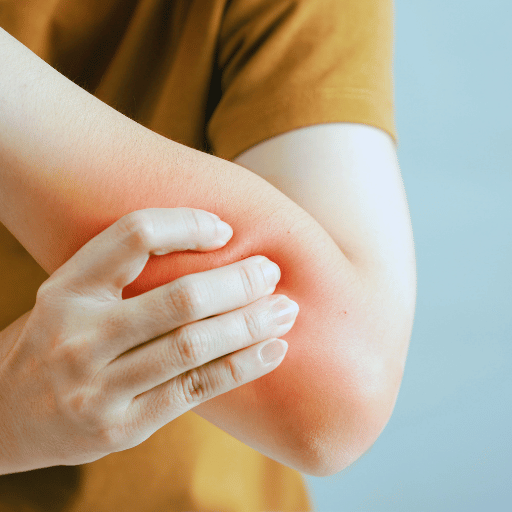
Many cases of tennis elbow begin when the forearm overloads the common extensor tendon through repeated wrist extension and gripping. It is not unique to racket sports. Office workers, gym users, chefs, technicians, mechanics, and people who carry heavy bags can all irritate the outside elbow when the forearm does not get enough recovery time.
From the literature, population surveys often report lateral epicondylitis as affecting 1-3% of adults each year. This is not a UAE rate, but it shows how often a small repeated-load problem can become a clinical complaint.
In traditional Chinese medicine assessment, the painful tendon is just one aspect. Your practitioner also checks forearm tightness, whether cold or heat changes the pain pattern, wrist range of motion, and the daily routines that aggravate the area. This pattern thinking does not replace a medical diagnosis, but it helps decide whether acupuncture, Tuina, moxibustion, herbal support, or referral is the right next step.
Think of an office worker who develops intense outer-elbow pain after long mouse use and weekend padel. The pain eases with rest, then returns when lifting a kettle. In that situation, a TCM visit should look beyond the sore spot and include the wrist-extensor load pattern and forearm tension.
Does Acupuncture Help Tennis Elbow? What the Evidence Can and Cannot Say
One widely cited randomized controlled trial from 1994 included 48 patients with chronic tennis elbow pain. After one non-segmental acupuncture session, the verum acupuncture group had a 55.8% pain-score reduction, compared with 15% in the placebo group. In the same study, 19 of 24 people in the verum group reported at least 50% pain relief, compared with 6 of 24 in the placebo group.
In a 2014 systematic review of acupuncture and moxibustion for lateral elbow pain, 19 RCTs were included. Three moderate-quality RCTs favored acupuncture over sham acupuncture, but other findings were affected by study quality and risk of bias. A fair summary is this: acupuncture for tennis elbow has short-term pain data, but the research does not support a blanket guarantee that it cures every case. For patients, the better clinic question is whether acupuncture is an effective treatment for tennis elbow in this specific situation after diagnosis and load pattern are reviewed.
A later systematic review and meta-analysis evaluated 10 RCTs and 796 subjects. It reported better pain-related outcomes with acupuncture than with several controls, but also noted small sample size, variable treatment protocols, and unclear procedures in some trials.
Clinical takeaway: UCLA Health physicians frame acupuncture as a pain-relief option that can sit beside physical therapy when the tendon still needs loading and movement retraining.
Adapted from UCLA Health, Ask the Doctors
Advantages
Acupuncture can be considered when pain limits grip use, when a patient wants a non-drug pain-management option, or when forearm tension is part of the clinical picture.
Limits
Evidence is stronger for short-term pain relief than for durable tendon recovery. Load control, graded strengthening, and activity changes still matter.
3-Zone TCM Elbow Recovery Map
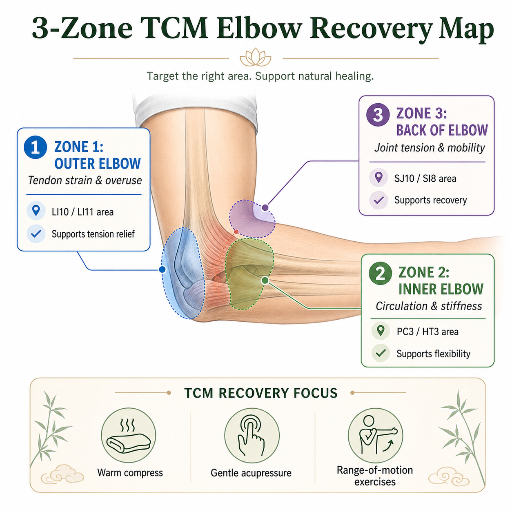
One practical way to discuss TCM care is the 3-Zone TCM Elbow Recovery Map. It keeps the painful tendon in sight without losing the bigger goal of restoring normal use.
| Zone | What the practitioner checks | Treatment question |
|---|---|---|
| Zone 1: local tendon zone | Ashi tenderness, outer elbow pain, tissue sensitivity, swelling, and pain on resisted wrist extension. | Can local acupuncture points be used without flaring symptoms? |
| Zone 2: forearm tension zone | Wrist-extensor tightness, trigger point patterns, grip fatigue, and pain that spreads down the forearm. | Should Tuina massage or dry needling-style muscle work be discussed? |
| Zone 3: movement-recovery zone | Repeated work tasks, racket grip, lifting form, sleep position, and return-to-load pacing. | What needs to change so pain relief does not disappear after the same activity? |
For tennis elbow, the painful tendon is Zone 1. Recovery planning also has to address forearm tension and repeated loading.
Local Acupuncture Points Commonly Considered for Tennis Elbow
Research papers and clinical articles often mention Ashi tender points, LI11, and LI10 for lateral epicondylitis. Some protocols also discuss points farther from the elbow, such as LI4 or SJ5. Specific strategy varies by exam. This is not a self-needling guide.
| Point or area | Why it may be selected | Local or distal | Clinical caution |
|---|---|---|---|
| Ashi tender points | Targets the most tender tissue around the lateral elbow. | Local | Avoid aggressive stimulation when pain is sharp or highly irritable. |
| LI11 / Quchi | Often discussed near the lateral elbow region and Large Intestine channel pathway. | Local-adjacent | Point depth and angle require trained assessment. |
| LI10 / Shousanli | May be selected when forearm tension and elbow pain appear together. | Forearm | Pressure and needle stimulation should match tissue sensitivity. |
| LI4 / Hegu | A distal point sometimes used in pain protocols and channel strategy. | Distal | Pregnancy and medical history must be screened by the practitioner. |
| SJ5 / Waiguan | May be considered when pain follows the outer arm pathway. | Distal forearm | Selection depends on pattern findings, not keyword matching. |
Safety starts with clean practice, sterile single-use needles, and qualified delivery. Good clinical risk management asks not only “which point is best?” but “which point, dose, and timing help this patient today?”
How Tuina Massage Supports the Acupuncture Plan
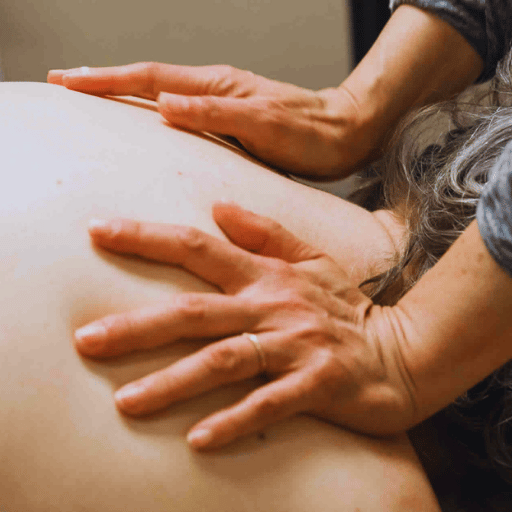
Tuina can support acupuncture when forearm tension, trigger point pain, or guarded wrist motion keeps feeding the elbow. This type of Tuina usually focuses on soft-tissue mobility and muscle tone, not on forcing the tendon to “break up scar tissue.”
Engineering Note: in a reactive tendon case, the useful pressure range is the amount that reduces guarding during treatment without creating a clear next-day pain spike. If pain rises for more than 24 hours after Tuina, the pressure, location, or session interval should be reduced.
In one session, gentle forearm work may come first, followed by acupuncture needles after the clinician checks which movements reproduce pain. In another case, local needling may come first and Tuina may stay away from the tendon until sensitivity calms down.
A combined TCM approach is not just “more treatment.” It is sequencing. Needling, manual acupuncture or electroacupuncture, Tuina, and moxibustion are balanced against symptom irritability and progress.
Acupuncture, Tuina, Moxibustion, Dry Needling, Physical Therapy, and Injections Compared
Points and methods are selected in relation to pain duration, tissue response, work demands, stiffness, weakness, and repeated overload. Use the chart below as a conversation guide, not a diagnosis.
| Case type | Useful discussion | Why it matters |
|---|---|---|
| Recent pain, under 2 weeks | Activity modification, assessment, gentle acupuncture if suitable. | Early flare control may prevent a longer pain cycle. |
| Chronic tennis elbow over 2 months | Acupuncture plus tendon-loading plan. | Short-term relief needs a load strategy to hold. |
| Pain with gripping | Check wrist extension, racket or tool grip, and forearm tension. | Every grip contraction asks the tendon to tolerate load. |
| Forearm tightness dominates | Tuina, trigger point therapy, or dry needling conversation. | Muscle guarding can keep the outer elbow irritated. |
| Cold-sensitive ache | Moxibustion may be assessed by the TCM practitioner. | Heat-based methods are not suitable for every elbow, so screening matters. |
| Post-injection recurrence | Review diagnosis, tendon load, and non-drug pain options. | Pain relief without behavior change may not solve recurrence. |
| Avoiding oral painkillers | Discuss acupuncture, bracing, topical support, and rehab timing. | Pain management can be built without relying only on tablets. |
| Athlete or racket player | Combine symptom care with grip, swing volume, and strength return. | Return too fast and the same tendon load returns. |
| Desk worker or mouse strain | Review workstation reach, wrist angle, and breaks. | Small loads repeated for hours can keep symptoms active. |
| Numbness, weakness, fever, deformity, major swelling | Medical review before TCM care. | These signs may point beyond simple lateral epicondylitis. |
Electroacupuncture and dry needling are sometimes discussed alongside acupuncture because each method can affect pain and muscle tone differently. For patients, the label matters less than whether the method fits the tissue state and the reason the elbow keeps being loaded.
What a TCM Recovery Plan May Look Like at Tong Ren Tang UAE
Tong Ren Tang UAE’s tennis elbow page lists acupuncture, herbal medicine, moxibustion, electroacupuncture, and topical herbal plasters as treatment options. The treatment mix in clinic should be tailored after examination rather than built from a fixed package.
- Assessment: pain location, grip triggers, wrist-extension pain, forearm tenderness, work or sport load, medical history, and TCM pattern review.
- Treatment choices: manual acupuncture or electroacupuncture may be considered, while Tuina or moxibustion can be added when tissue response fits.
- Response monitoring: the clinician should check pain during grip tasks, tenderness after treatment, and symptom change over the next 24 hours.
- Recovery planning: the plan should include what to pause, what loaded movements to modify, and when to restart graded loading.
How long to continue treatment depends on how long the problem has lasted, how irritable the tissue is, whether injections were used before, work demands, and how quickly the elbow responds to changes. Do not aim for a fixed session count; set a timed review point. If pain, grip tolerance, or function has not changed after a fair trial, review the plan.
To compare your symptoms with the 3-zone map, visit the tennis elbow treatment page and book a clinical assessment when your pain matches the pattern.
When to Seek Medical Review Before or During TCM Care
Not all outer elbow pain is tennis elbow. Pain triggers may indicate the need to start with medical review rather than acupuncture or massage.
- Sudden injury, fall, pop, or visible deformity.
- Numbness, tingling, or weakness into the hand.
- Fever, redness, tissue warmth, or marked swelling.
- Night pain that is severe or unexplained.
- Pain that appears to come from the neck, which may suggest cervical or nerve involvement.
- No response after a fair trial of care and load modifications.
NCCIH also cautions that acupuncture should not replace necessary medical care. For elbow problems, the right path may mean acupuncture, physical therapy, imaging, medication review, or referral depending on the signs.
What Is Changing in Tennis Elbow Recovery
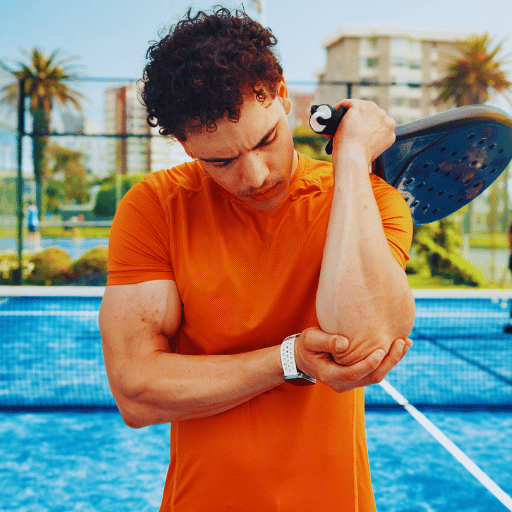
Care planning is moving away from one-time treatments. A corticosteroid injection, acupuncture session, brace, or massage may reduce symptoms for a period, but recurrence risk remains when the same joint load continues.
For 2026 care planning, the first visit should answer two questions: “What can reduce my pain this week?” and “What can reduce the reason it keeps returning?” TCM can address the first question with acupuncture, Tuina, or moxibustion when indicated. The second question may require grip changes, physical therapy, workload modification, or strength training.
This is the strongest Chinese medicine position for tennis elbow: a planned recovery path with review points and referral when the case does not behave like simple lateral epicondylitis.
FAQ
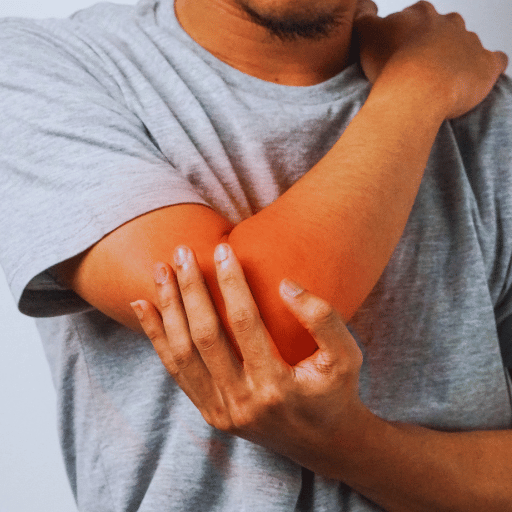
Does acupuncture get rid of tennis elbow?
Acupuncture may reduce tennis elbow pain in the short term, but “get rid of” is too strong. Recovery is still influenced by load, grip habits, forearm strength, sleep position, workload, and whether another diagnosis is present.
How many acupuncture sessions are needed for tennis elbow?
No single session number fits every case. Set a review point using pain, grip tolerance, and next-day response.
Where are acupuncture needles placed for tennis elbow?
Common discussions include Ashi tender points, LI11, LI10, LI4, SJ5, and the extensor muscle region around the elbow. After clinical assessment, the practitioner should choose needle placement by checking pain behavior, medical history, tissue sensitivity, pregnancy status, medication use, and whether the pain is truly tennis elbow rather than another elbow or nerve condition.
Is Tuina massage good for tennis elbow?
Tuina may help when the problem involves guarding and forearm tension. It should not be aggressive over a hot, highly irritable tendon.
Is acupuncture safer than steroid injection?
They have different risk profiles. Acupuncture risk is tied to practitioner training, sterile needles, and correct technique. Injection risk and benefit depend on diagnosis, timing, medication type, and tendon condition. A clinician should compare those factors for your case, especially if medical conditions affect healing.
Can acupuncture be combined with physical therapy?
Yes. Pain-relief care and tendon-loading rehab can be combined when timing is coordinated.
Is tennis elbow the same as golfer’s elbow?
No. Tennis elbow usually means pain on the outside of the elbow, while golfer’s elbow usually means pain on the inside. Both can involve tendon overload, but the location, tissues, movement tests, and acupuncture points differ.
Next Step
If your elbow pain matches the outside-elbow, grip-sensitive pattern above, check your symptoms against the 3-zone map before choosing.
Related Tong Ren Tang UAE Resources
References and Sources
- StatPearls, NCBI Bookshelf: Lateral Epicondylitis
- Molsberger A, Hille E. British Journal of Rheumatology, 1994: The analgesic effect of acupuncture in chronic tennis elbow pain
- Gadau M et al., BMC Complementary and Alternative Medicine, 2014: Acupuncture and moxibustion for lateral elbow pain
- Zhou Y et al., Pain Research and Management, 2020: Effectiveness of Acupuncture for Lateral Epicondylitis
- UCLA Health: Can acupuncture ease the pain of tennis elbow?
- Henry Ford Health: Acupuncture for tennis or golfer’s elbow
- NCCIH: Acupuncture: effectiveness and safety
- Tong Ren Tang UAE: Tennis elbow treatment